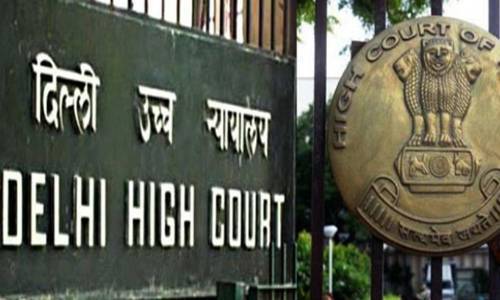
The Delhi High Court in V K Verma v. CBI observed that revisional jurisdiction is not meant to test the waters of what might happen in the trial.
The Hon’ble Bench quoted, “The revisional jurisdiction is not meant to test the waters of what might happen in the trial. The Revisional Court has to consider the correctness, legality or propriety of any finding inter se an order and as to the regularity of the proceedings of the court below. While doing so, the Revisional Court does not dwell at length upon the facts and evidence of the case, rather it considers the material only to satisfy itself about the legality and propriety of the findings, sentence and order and refrains from substituting its own conclusion on an elaborate consideration of evidence. In the instant case, the Petitioner has failed to make out a case for exercise of the revisional jurisdiction since there is no patent error in the impugned order on the face of record.”
Adding further that it is settled law even the powers conferred to this Court u/s 482 of CrPC have to be used sparingly with circumspection and in rarest of the rare cases, only to prevent abuse of the process of any Court or to secure the ends of justice.
The Court observed that “The beauty of procedural law lies in the stages and remedies available during the course of a criminal proceeding. The procedure ought to be followed and framing of charge is an important step in that process where the trial court peruses the record for want of a prima facie probability of the accused having committed the offence as alleged. Framing of charge does not mean that the accused is guilty, it only implies the accused may be guilty. The minute scrutiny of evidence is a matter of trial.”